
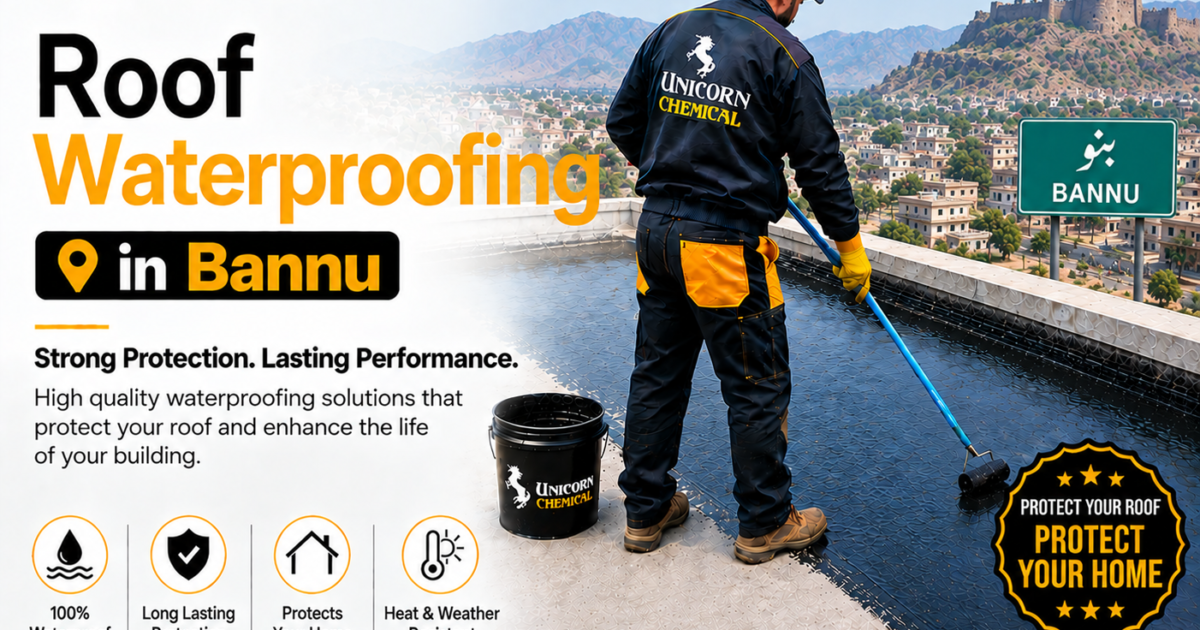
Roof leakage can gradually affect a building when rainwater enters through cracks, weak joints, damaged coatings and poorly sealed roof openings. A small leak may first appear as a damp ceiling or water stain but repeated moisture can damage plaster, paint and interior finishes.
Roof Waterproofing in Bannu helps protect homes, offices, warehouses, agricultural buildings and industrial properties from water penetration. The right waterproofing method depends on the roof surface, existing damage, drainage arrangement and project requirements.
Unicorn Chemical provides Roof Waterproofing Services based on the condition of each roof. Proper inspection and surface preparation are important before applying the selected waterproofing system.
Roof Areas That Commonly Develop Leakage
Concrete roofs can develop cracks over time because of aging and structural movement. Construction joints and connections between different roof sections can also become weak.
Water may enter through parapet walls, roof edges, drainage outlets, pipe openings and water tank bases. Standing water can make the problem worse when drainage outlets are blocked or the roof does not drain properly.
An old waterproofing layer may also become cracked or detached. Applying a new coating without preparing the damaged surface may not provide the expected protection.
Waterproofing Systems Available for Different Requirements
Different roofs need different waterproofing approaches. A site inspection can help determine which system is appropriate.
PU Waterproofing
PU waterproofing can form a flexible and seamless protective layer. It may be suitable for roof surfaces where continuous coverage is required.
Liquid Membrane
Liquid membrane systems can cover prepared surfaces continuously and can be useful around corners, edges and detailed roof sections.
Torch On Bitumen Membrane
Torch on bitumen membrane uses waterproof sheets installed over a prepared roof. Proper overlaps and detailing around joints and edges are important.
Cementitious Waterproofing
Cementitious waterproofing can be considered for suitable concrete surfaces. Proper cleaning and preparation are required before application.
Crack and Joint Treatment
Cracks and joints should be examined before the main waterproofing layer is applied. The repair method depends on the condition and location of the damaged area.
Roof Waterproofing Price in Bannu
The Roof Waterproofing Price depends on the roof size, selected waterproofing system, surface condition and preparation requirements.
| Waterproofing System | Indicative Price |
|---|---|
| Cementitious Waterproofing | PKR 150 to 350 per sq ft |
| PU or Liquid Membrane | PKR 200 to 450 per sq ft |
| Torch On Bitumen Membrane | PKR 180 to 400 per sq ft |
| Large Commercial or Industrial Roof | Custom quotation |
| Roof Crack Repair | Site inspection required |
For a 1000 sq ft roof, indicative planning costs may be around PKR 150000 to 350000 for cementitious waterproofing, PKR 200000 to 450000 for PU or liquid membrane and PKR 180000 to 400000 for torch on bitumen membrane.
These are indicative planning ranges rather than fixed quotations. The final Roof Waterproofing Cost can change when extensive crack repair, old coating removal, drainage correction or additional surface preparation is required.
Areas Covered for Roof Waterproofing in Bannu
According to recent district information, Bannu has six tehsils: Bannu, Baka Khel, Domel, Kakki, Miryan and Wazir. Government audit information also records six tehsils and 111 village councils in the district.
Our Waterproofing Services can be considered for properties in:
- Bannu
- Baka Khel
- Domel
- Kakki
- Miryan
- Wazir
- Bannu city
- Bannu Township
- Residential communities
- Commercial markets
- Warehouses
- Workshops
- Agricultural buildings
- Industrial properties
The 2023 census records a Bannu district population of 1,357,890 across an area of 1,972 square kilometres.
Residential Roof Waterproofing
Homes can experience leakage around water tanks, bathrooms, drainage outlets and pipe penetrations. Cracks in the concrete roof can also provide pathways for rainwater.
A damp ceiling does not always show the exact location where water entered. Moisture can travel through concrete before becoming visible inside the room.
A professional Waterproofing Contractor should therefore inspect the roof surface and vulnerable details before deciding whether localized repair or complete waterproofing is required.
Commercial Roofs and Business Buildings
Commercial buildings may have larger roof areas with multiple drains, service pipes and equipment installations. Leakage in these buildings can affect offices, stored goods and daily operations.
A complete roof assessment should include visible cracks, joints, drainage points, roof edges and penetrations rather than focusing only on the area where water appears indoors.
The quotation should clearly identify the waterproofing system, preparation work, crack treatment and application scope.
Agricultural and Storage Structures
Agriculture and livestock are important parts of Bannu’s economic activity. Government information also identifies manufacturing, leather and dairy among the district’s economic sectors.
Farm structures, storage buildings and warehouses can have broad roof surfaces that require protection from rainwater.
Drainage should be considered along with waterproofing because blocked outlets can allow water to remain on the roof for longer periods.
Industrial Roof Protection
Industrial properties can have large roofs with machinery, service pipes, ventilation systems and other installations. Each penetration or connection can require careful detailing.
Bannu’s economic profile includes manufacturing and leather related activity along with agriculture, dairy and livestock.
For large industrial roofs, the waterproofing plan should consider roof size, drainage, joints, penetrations, existing coatings and the condition of the concrete surface.
Preparing a Roof Before Waterproofing
The work normally begins with an inspection of the existing roof. Cracks, loose material, damaged coatings, standing water and drainage problems are identified.
The surface is then cleaned and prepared. Loose or deteriorated material may need to be removed before repairs begin.
Cracks and joints are treated according to their condition. Parapet walls, roof edges, corners, drainage outlets, pipe openings and water tank bases should receive suitable attention.
After preparation, the selected waterproofing system is applied over the required area. The completed roof should be checked for gaps and incomplete coverage.
Signs That Your Bannu Roof Needs Attention
A professional roof inspection may be useful when you notice:
- Damp patches on ceilings
- Water stains after rainfall
- Peeling interior paint
- Cracks on the roof
- Standing rainwater
- Leakage around water tanks
- Moisture near pipe openings
- Damaged old waterproofing
- Recurring leakage after temporary repairs
Early assessment can help identify the source of water entry before continued moisture causes additional damage.
Selecting a Roof Waterproofing Company
When choosing a Roof Waterproofing Company, do not compare contractors only according to the lowest price.
Ask which waterproofing material will be used and whether the quotation includes surface cleaning, preparation, crack treatment and waterproofing layers.
The contractor should also explain how drainage outlets, roof edges, joints and pipe penetrations will be treated.
A search for a Waterproofing Company Near Me can help identify available providers but the proposed material and complete scope of work should still be reviewed.
Maintaining Roof Protection
Waterproofing should be followed by basic roof maintenance. Drainage outlets should remain clear so rainwater can leave the surface properly.
Avoid unnecessary drilling through waterproofed areas. If new equipment or pipes are installed later, the affected areas should be sealed correctly.
After heavy rainfall, check areas where water tends to collect. Small cracks and damaged sections can be repaired before they develop into larger leakage problems.
Regular inspection can help preserve long term Roof Protection.
Frequently Asked Questions
What is the Roof Waterproofing Cost in Bannu?
Indicative rates can range from PKR 150 to 450 per sq ft depending on the waterproofing system, roof condition and preparation requirements.
Which waterproofing system is suitable for a concrete roof?
PU, liquid membrane, torch on bitumen and cementitious waterproofing can be considered for different roof conditions. The suitable option depends on the existing surface and project requirements.
How much does it cost to waterproof a 1000 sq ft roof?
Indicative planning costs are PKR 150000 to 350000 for cementitious waterproofing, PKR 200000 to 450000 for PU or liquid membrane and PKR 180000 to 400000 for torch on bitumen membrane.
Can an old leaking roof be waterproofed?
Yes. An old roof can be assessed and prepared for waterproofing. Damaged coatings, cracks, loose areas and drainage problems may need treatment before the new system is applied.
Does waterproofing solve standing water?
Waterproofing helps prevent water penetration but does not automatically correct poor drainage. Roof slope and drainage outlets should also be checked when water remains after rainfall.
Can warehouses and factories receive roof waterproofing?
Yes. Large commercial, agricultural and industrial roofs can be assessed according to their roof size, construction, drainage and surface condition.
Professional Roof Waterproofing in Bannu
Recurring roof leakage should be investigated before it causes more extensive moisture damage. Cracks, damaged coatings, standing water and damp ceilings can indicate that the existing roof protection needs attention.
Unicorn Chemical PK provides Roof Waterproofing Services for residential, commercial, agricultural and industrial properties. Depending on the project, the service can include inspection, surface preparation, crack treatment and application of a suitable waterproofing system.
For an accurate Roof Waterproofing Price, a site assessment can help determine the required materials, preparation work and overall project scope.